


Support Your Indoor Jungle: Why Vertical Staking Transforms Vining and Climbing Houseplants
We recently held a webinar that covers this topic in detail. If you prefer video format, go ahead and listen to it here.

If you are a houseplant enthusiast, you’ve likely been there: watching a beautiful Monstera, Pothos, or Philodendron outgrow its space, its heavy vines trailing untamed across a shelf or drooping toward the floor.
Many of us start our plant journeys admiring lush trailing vines. However, when these natural climbers are left to sprawl without support, they miss out on reaching their true potential.
Let's dive into the science behind why vining plants crave vertical structure, how they grow in the wild, and how you can replicate nature indoors to unlock massive, mature foliage.
The Biology of a Climber: Epiphytes vs. Hemiepiphytes
To understand how to care for vining houseplants, it helps to look at where they come from. In their natural tropical rainforest habitats, these plants aren't meant to walk along the ground. They are biologically programmed to seek out trees and climb toward the canopy.
Most climbing houseplants fall into two categories:
-
Epiphytes: These are plants that grow directly on top of other plants (usually trees) for support. They aren't parasites; they don't steal nutrients from the host tree. Instead, they absorb moisture and nutrients from the air and passing rain. Classic examples include orchids, bromeliads, and certain types of Hoyas.

Orchid in nature climbing a mango tree
-
Hemiepiphytes: These plants have a bit of a "split personality". They begin life rooted in the forest floor. As they mature, they make a distinct pivot to become vertical climbers, scrambling up nearby tree trunks. Your favorite Monsteras, Pothos, and Philodendrons are perfect examples of hemiepiphytes.

Monstera plant climbing a tree in nature
When you leave a hemiepiphite trailing off a bookshelf, you're actually working against its natural instincts. Going vertical gives them access to better air circulation, dappled light, and the security they need to transition from juvenile vines to mature specimens.
Nature’s Secret Weapon: Aerial Roots & Fenestration
Have you ever noticed those bumpy, brown, finger-like projections growing out of your plant's stems? Those are aerial roots, and they are a climber’s secret weapon.

Aerial root coming off Monstera plant being supported by Zella trellis from Treleaf.
In the wild, aerial roots act like tiny hands, gripping tightly onto textured tree bark to anchor the plant as it pulls itself upward. They also act as sponges, soaking up atmospheric moisture and nutrients.
Houseplant Care Tip: Never cut off healthy aerial roots! Dropping them might look tidier, but it stalls leaf maturity. Instead, gently guide them back down into the potting soil or tuck them directly against your plant support. Think of them as extra straws helping your plant drink and stay stable.
Aerial root being redirected into pot with a Monstera being supported by Zella trellis from Treleaf.

As a plant climbs higher and feels secure, it undergoes a transformation. This is when fenestration happens—the iconic splits and holes we love in Monstera leaves. In nature, these holes are brilliant design features that let wind pass through without tearing the leaves, while allowing light to filter down to the lower foliage. Indoors, fenestration is the ultimate sign that your plant feels stable, mature, and happy.

Mature Monstera plant showing fenestrations
Traditional Plant Supports: The Good, the Bad, and the Messy
To help your plants go vertical, you need to provide a solid structure. Let's look at the traditional options plant parents turn to:
1. Bamboo Stakes and Sticks
In addtion to bamboo stakes, we would put anything that has the form factor of a rod in this category. So any sticks, coir poles would also fall in this section.
-
The Pros: Cheap, highly accessible, lightweight, and easy to pop into a small pot.
-
The Cons: Flimsy. As your plant grows heavier, these stakes tend to lean or tip over altogether. They break down quickly in damp soil and offer zero texture for aerial roots to grip.

Plant being supported by a bamboo stick
2. Moss Poles
-
The Pros: Filled with sphagnum moss, they hold moisture beautifully. This mimics a damp rainforest tree trunk, making it incredibly easy for aerial roots to burrow in and attach. They are highly effective for growing massive leaves.
-
The Cons: Extremely high maintenance. To get the benefits, you have to keep them constantly moist. If they dry out, the moss becomes brittle, sheds debris all over your floor, and can attract pesky fungus gnats.

Moss poles holding up a Monstera Albo plant
3. Plain Wooden Planks
-
The Pros: Perfectly mimics natural tree bark and provides a sturdy, textured surface for root attachment.
-
The Cons: Raw wood eventually rots when buried continuously in wet potting soil. Plus, a plain construction board doesn't always match a curated home decor aesthetic.

Shingling plant attached to a wooden plank
The Engineered Solution: Where Material Science Meets Botanical Art
As an engineer and corporate scientist turned entrepreneur, I watched my own collection of over 150 houseplants outgrow makeshift stick-and-string setups. I knew there had to be a way to design something that honored plant biology without creating a high-maintenance mess in the living room.
That’s why we created Treleaf. We engineered U.S.-patented structural supports built on actual plant science:
-
No Ties Needed: The trellis shapes are meticulously formed to gently nestle and cradle vines naturally, eliminating the need to constantly tie up stems.
-
No-Rot Technology: We kept the beautiful, organic look of natural wood grain but solved the durability problem. Our stakes feature a double-coated finish and exterior-grade sealants so they stay solid and rot-free in wet soil for years.
-
Stunning Aesthetics: They act as functional pieces of living art that complement your home's interior design, rather than looking like a messy DIY project.

Design features of Treleaf trellises
Tailoring the Support to Your Plant's Personality
Not every vining plant climbs the same way. When picking out your next support, match the structure to your plant's specific growth habit:
-
Multi-Stem Vining Plants (e.g., Pothos, Heartleaf Philodendron): These plants push out many smaller, trailing vines from a single pot. Choose a wider trellis structure that allows you to separate and spread out multiple stems, turning a tangled bush into a clean, organized display.

This Satin pothos has multiple vines and the Palmella trellis would be a great option to hold up the plant

Setting up Satin Pothos with the Palmella trellis
-
Single-Stem Heavy Climbers (e.g., Monstera Deliciosa, Philodendron Melanochrysum): These plants focus their energy on a singular, thick main stem. They need a tall, rigid, vertical support. Secure the main stem firmly against the flat surface to mimic a tree trunk, encouraging the aerial roots to lock in and start scaling upward.

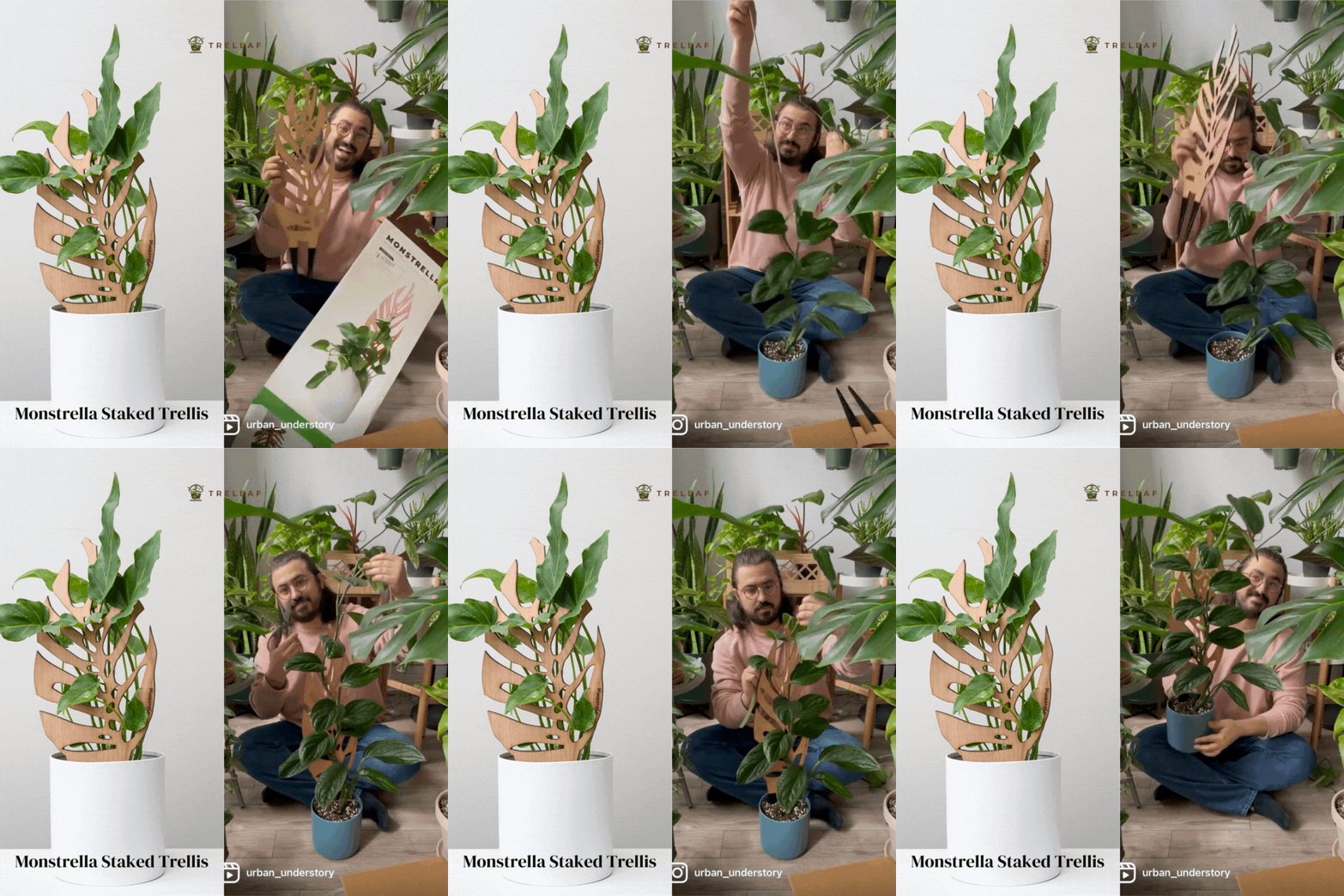
Philodendron Melanochrysum has a single stem that wants to climb. A trellis with a more upright shape like Anthrulla works great. Before and after giving a support to a climbing Philodendron using Anthrulla trellis

Philodendron stem supported by Anthrulla Trellis. It is important to place the support just behind the main stem and tie it on to the structure.
-
The "Taming" Category (e.g., Snake Plants, ZZ plant): Some plants aren't true vertical tree-climbers, but they still get top-heavy or messy. For these, a trellis acts as a decorative frame to corral wild leaves, add structure, and provide a gorgeous backdrop.

Unruly Snake plant being supported by Cactrella trellis from Treleaf

Cactrella trellis also acts as a backdrop while also keeping the plant contained.
Turn Your Pot into Living Art
Providing proper vertical support isn't just a minor care detail—it is a complete transformation for your indoor jungle. It rewards you with larger foliage, iconic fenestrations, better pest resistance, and an elevated design focal point for your home.
Take a look at your trailing plants this weekend. Are they ready to stop crawling and start climbing?

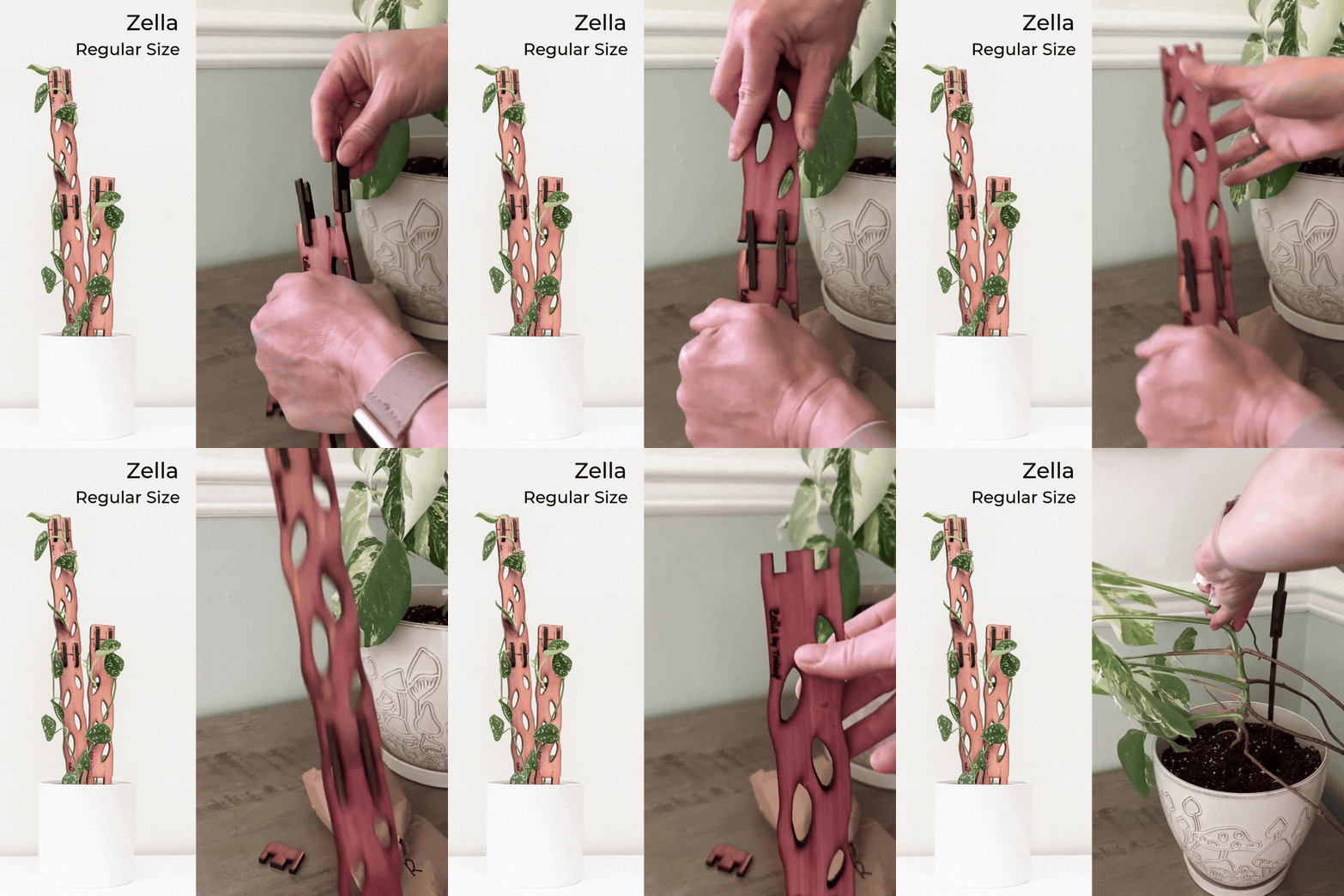
Zella trellis holding up a Mini Monstera vine
Want to give your climbers an upgrade? Explore our collection of nature-inspired, engineered wooden trellises at Treleaf.shop